For decades, Kenya’s property market has largely revolved around one aspiration: home ownership. Buying land or a house has long been viewed as the ultimate financial milestone and a pathway to long-term security.
Yet beneath this traditional narrative, a different trend is slowly emerging in Kenya’s residential sector. More investors are beginning to view housing not just as a place to live, but as a structured income-generating asset.
This shift is giving rise to what global markets commonly refer to as the Buy-to-Rent model.
Under this model, investors purchase residential units to generate rental income. Rather than managing tenants individually, these properties are often placed under professional property management structures that oversee leasing, maintenance, and tenant relations.
In mature real estate markets such as the United Kingdom, the United States, and South Africa, Buy-to-Rent developments have grown into a significant asset class. Institutional investors allocate billions of dollars to residential rental portfolios because of their ability to generate stable, predictable income streams.
Kenya is beginning to show early signs of moving in a similar direction.
What’s Driving Rental Housing Demand in Kenya?
Urbanization continues to reshape Kenya’s housing landscape. According to the World Bank, the country’s urban population is growing at approximately four per cent annually, one of the fastest urbanization rates on the continent. As cities expand, housing demand continues to rise.
Estimates suggest that Kenya currently faces a housing deficit of over two million units, while annual housing demand is estimated at around 250,000 homes, compared to the formal supply of roughly 50,000 units each year (World Bank; UN-Habitat).
This structural gap has significantly influenced how housing is consumed in urban areas.
In Nairobi, renting has become the dominant form of housing for much of the working population. The city’s continued economic expansion attracts thousands of new residents each year, many of whom are young professionals seeking proximity to employment centres and flexible living arrangements.
For this demographic, renting offers greater flexibility. Career mobility, evolving life stages, and the high upfront costs associated with property ownership often make rental housing the more realistic option.
At the same time, affordability remains a major challenge. UN-Habitat estimates that over half of Kenya’s urban residents live in informal settlements, reflecting the scale of unmet demand for formal housing.
Together, these dynamics are creating sustained demand for well-designed, professionally managed rental housing. As that demand grows, professional management is becoming increasingly important for both tenants and investors.
The Role of Professional Management in Buy-to-Rent Housing
One of the features that sets Buy-to-Rent housing apart is professional property management.
Rather than relying on individual landlords, developments are managed by specialized operators who apply consistent operational standards across entire residential communities.
These operators oversee leasing strategies, tenant engagement, maintenance planning, and financial reporting. The result is a residential environment where buildings are maintained to consistent standards and investor assets are better protected.
For individual investors who purchase units within such developments, the benefits of this model are evident. Their investment becomes part of a professionally managed residential portfolio designed to maintain occupancy levels, sustain property standards, and preserve long-term asset value.
Market data increasingly reflects the attractiveness of rental housing as an investment class. According to the Hass Consult Property Index, residential rental yields in Nairobi in 2025 averaged about 7.4 percent, the highest level recorded in nearly two decades.
For investors seeking income-generating assets in a relatively stable sector, these yields present a compelling opportunity.
How Institutional Models are Shaping Kenya’s Rental Market
As interest in rental housing grows, institutional management models are beginning to appear in Kenya’s residential sector.
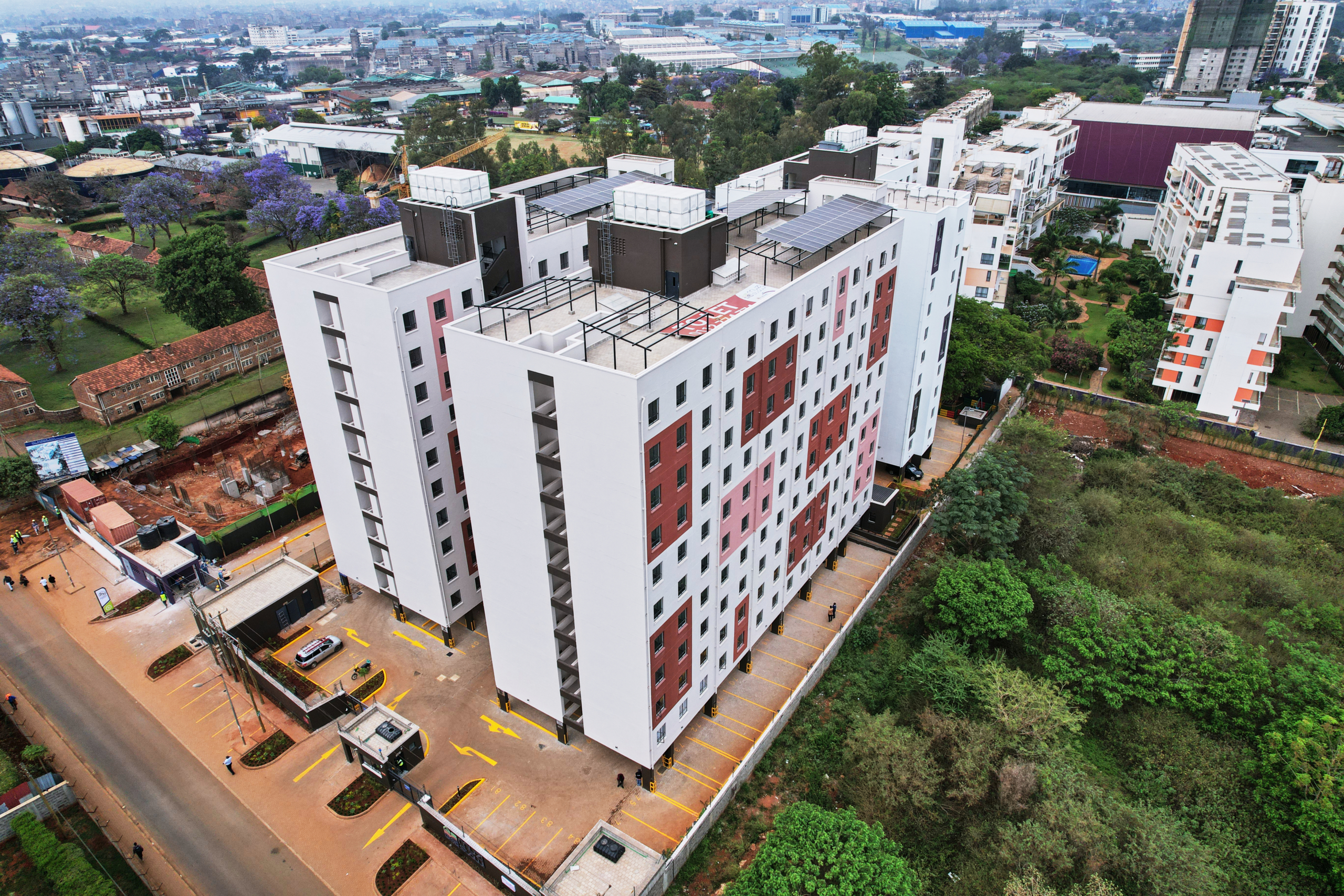
Kenya is beginning to see early examples of this model through residential developments such as Muzi Stawi and Muzi Salama, where institutional frameworks guide property management and operational standards.
In these developments, tenants benefit from professionally managed buildings, well-maintained communal spaces, and responsive maintenance services that enhance the overall residential experience.
For investors, institutional management ensures that operational and financial benchmarks are consistently applied.
Organisations such as International Housing Solutions (IHS) bring experience from multiple markets where residential portfolios are managed under strict performance frameworks. These benchmarks guide occupancy management, operational efficiency, and long-term asset maintenance.
As these practices become more common in Kenya, they have the potential to elevate standards across the entire residential rental sector.
How Sustainability Supports Affordability in Rental Housing
Sustainability is also becoming more relevant in rental housing, as developers and investors increasingly emphasize efficiency and operating costs.
Green building practices are increasingly being integrated into housing developments to improve operational efficiency and reduce long-term living costs.
Energy-efficient lighting, water-saving fixtures, and optimized building design can significantly reduce utility consumption for residents.
In Kenya’s growing rental housing market, these efficiency measures are increasingly becoming important as developers seek ways to manage the operating costs while ensuring quality housing.
For tenants, these efficiencies lower the overall cost of living.
For investors, energy-efficient buildings remain competitive for longer periods, helping sustain occupancy and protect long-term asset value.
Sustainability, therefore, becomes not only an environmental consideration but an economic one.
Kenya’s Buy-to-Rent Market is Still in Its Early Stages
Kenya’s Buy-to-Rent market is still at an early stage compared to more mature global markets.
However, the underlying fundamentals are strong: rapid urbanization, a growing professional workforce, and a rising demand for professionally managed rental housing.
As institutional management models expand and investor participation increases, the residential rental sector may gradually evolve into one of the most important real estate asset classes in the country.
In the long term, the success of Kenya’s housing sector may depend not only on how many homes are built, but also on how effectively those homes are managed and financed.
What This Means for Investors
The Buy-to-Rent model represents more than a new investment strategy. It introduces a structured approach to residential housing that aligns tenant experience, professional management, and investor returns.
As Kenya’s housing market continues to mature, developments that combine institutional management, sustainability, and disciplined asset stewardship are likely to become increasingly attractive to investors seeking stable residential assets.