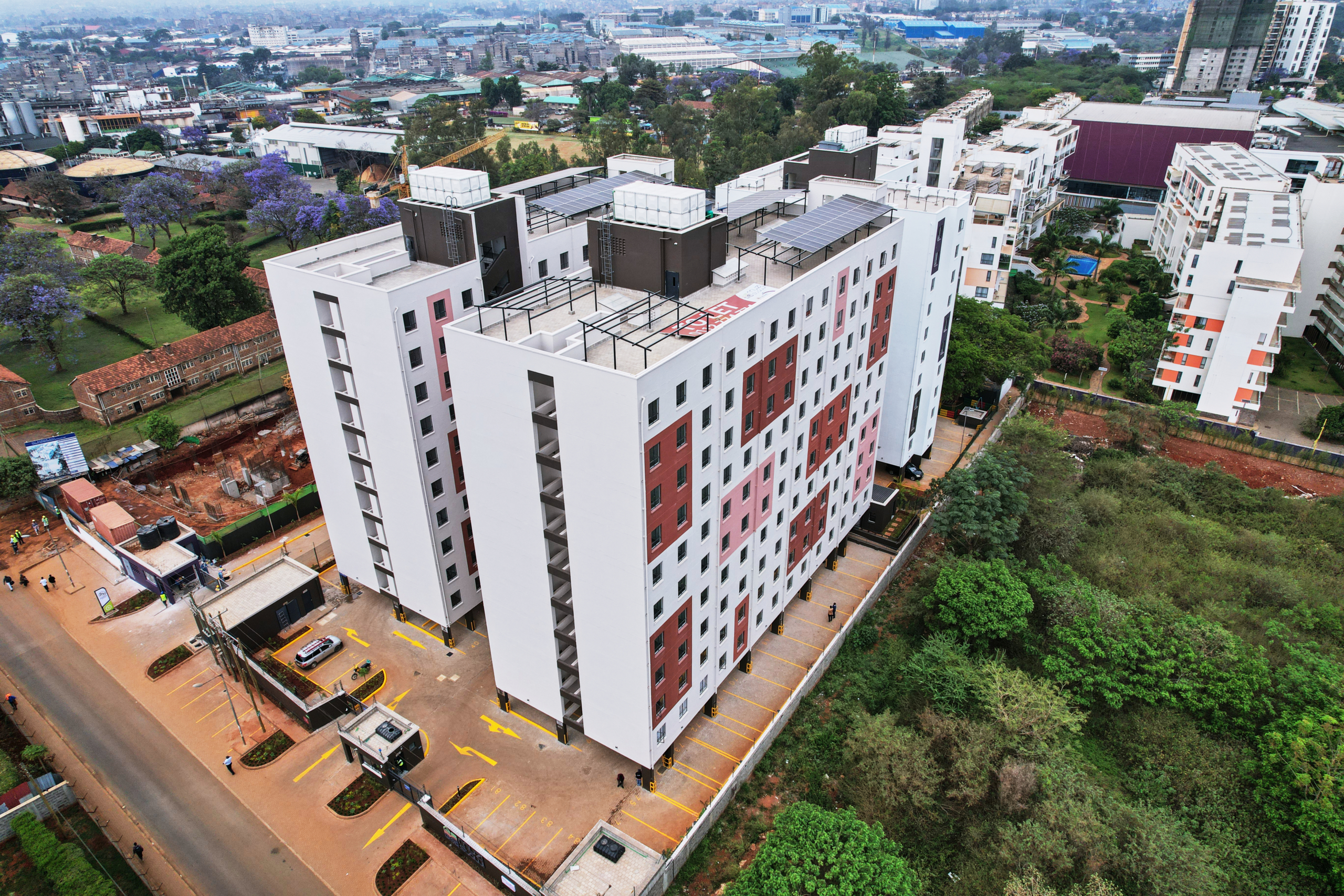

As developers face growing pressure to optimise project life-cycle costs for the benefit of the end users, green building features are gradually being integrated into residential developments across the country.
But even with the growing momentum around sustainable housing, concerns around cost, accessibility, and long-term viability continue to hamper the scale of market-wide adoption. For Freda Rutere-Mbugua, a Real Estate Investment Manager at International Housing Solutions (IHS), sustainability is increasingly becoming central to how residential developments in Kenya are designed, built, marketed and valued in the property market.
In an exclusive interview with Acre Magazine, Freda discusses how sustainability is being adopted across Kenya’s residential developments, the cost implications for developers, the role of green building standards such as IFC EDGE, and why long-term value is increasingly shaping the future of housing.
The Shift Towards Sustainable Housing in Kenya
Sustainability in Kenya’s real estate sector is rapidly evolving, with many developers increasingly forced to rethink ways to design, operate, and maintain residential developments. While it used to be seen as an environmental or premium feature in high-end housing estates, it is gradually becoming a mainstream requirement in residential construction.
A combination of factors, including regulatory changes, infrastructure challenges, operational efficiency, and evolving market expectations, drives this shift. From solar water heating systems to integrated rainwater harvesting systems, sustainability measures are increasingly embedded in residential projects. However, their adoption is dependent on the development type and the developer’s priorities.
According to Freda Rutere, developers implement sustainable building features across different layers, often driven by different market needs.
“Some of the measures adopted are in response to the statutory requirements in Kenya,” she explains. “Elements such as solar water heating are a requirement from a compliance perspective. Others are out of necessity in response to underdeveloped municipal infrastructure.”
Rainwater harvesting is a prime example. Inadequate water supply and unreliable infrastructure have led to the creation of alternative water solutions, which are more of a necessity than a sustainable practice. With rapid population growth in urban areas, which intensifies pressure on already stretched infrastructure, developers are forced to integrate features that provide a reliable and adequate supply of utilities.
“We have things like rainwater harvesting measures, which are a response to the insufficiency of the existing infrastructure,” Rutere says.
This highlights a reality in Kenya’s housing market that most people don’t realise: developers don’t always adopt sustainability measures simply because they want to ‘go green’. In some cases, it’s strictly a response to structural challenges that directly impact how residents live in different areas.
Does Building Sustainably Cost More in Kenya?
The perception that sustainable housing is expensive is one of the biggest barriers to a wider adoption of the concept in Kenya’s real estate sector. While the long-term benefits of sustainability are agreeable, upfront construction costs continue to influence many developers’ decisions.
According to Rutere, sustainable housing in Kenya comes with an additional cost, though the certification framework and measures adopted determine the extent of that increase.
“Yes, there is definitely an incremental cost to building sustainably,” she says. “But it depends on the certification tool that the developer opts to use.”
Globally recognised green building certifications, such as LEED (Leadership in Energy and Environmental Design) and IFC EDGE (Excellence in Design for Greater Efficiencies), serve different needs in the housing market and, therefore, come with distinct compliance requirements, technical thresholds, and costs. In Kenya, EDGE certification is more popular thanks to its accessibility, cost-effectiveness, and simplified approach to sustainability impact measurement.
Even with that, sustainability still affects all components of residential development. Integrating these features comes with additional costs, particularly in construction materials, water systems, insulation, lighting, and glazing.
Higher-specification glazing, for instance, is an effective design intervention that significantly improves thermal performance, with studies indicating it can minimise building energy consumption by nearly 17%, reducing heat gain and the need for mechanical cooling systems. Similarly, roof and slab insulation improve indoor comfort and energy efficiency, particularly in urban areas which experience increasing temperatures due to urbanization.
“There’s an incremental cost associated with the type of masonry used, the type of glazing, insulation, and even the sanitary fittings,” Rutere explains. “In almost every component of the building, there’s an incremental cost because you’re buying a higher specification component.”
Water-efficiency systems, LED lighting, solar technologies, and renewable energy integrations may increase upfront costs; however, they minimise operational expenses over the long-term.
Rutere argues that quantifying the long-term financial implications of sustainable design is challenging, so it’s hard to fully understand the return on investment associated with sustainable buildings unless developers track it.
“Unfortunately, there’s not enough data tracking what that incremental cost is,” she says. “Often developers are not quantifying what that incremental cost is so that they can tie it back to the income they’ll be able to derive from the asset.”
The gap in the market data remains a major factor affecting the adoption of sustainable housing in Kenya. Without consistent local performance benchmarks, it’s easy to see green building primarily as an expense rather than a long-term value strategy.
Yet globally, sustainable buildings are recognised for their stronger operational performance, reduced maintenance costs, higher tenant retention rates, and greater resilience against future market and regulatory changes.
In Kenya’s urban property market, where utility costs and the availability of reliable infrastructure continue to influence buying decisions, operational efficiency is becoming paramount in determining value.
Rutere notes that sustainable housing can reduce the risk of long-term asset obsolescence by ensuring buildings remain competitive in the evolving real estate market while also reducing monthly utility costs for end occupiers.
“Building sustainably protects the developer from the obsolescence of their asset,” she explains. “Your property will have higher occupancy throughout its lifespan, you’ll be able to command higher rents, and therefore competitive exit yields.”
As Kenya’s housing market expands, developers must shift their attention from how cheaply they can build now to how relevant and competitive their apartments will be in the coming years.
Cost vs Long-Term Value in Residential Developments
Green building features come with higher upfront costs, but the long-term operational savings developers enjoy surpass the initial investment. This is evident in urban residential areas, where landlords and occupiers continue to face rising electricity costs, pressure on infrastructure, and water scarcity.
According to Rutere, water and energy efficiency measures carry the most measurable savings from sustainable housing development practices.
“I would say water and power are the highest savings enjoyed by the occupier,” she explains.
Elements such as rainwater harvesting systems, energy-efficient lighting, solar energy, thermal insulation, and water-saving fixtures minimise operational costs. These savings can be particularly beneficial for middle-income earners, whose monthly housing decisions are heavily influenced by household expenses.
“We’ve seen that savings to occupiers are roughly equivalent to one month’s rent on an annual basis,” Rutere says.
This creates a competitive advantage for developers and landlords. Since green-certified buildings allow tenants to spend less on utilities and operational costs, they can justify slightly higher rents without increasing the total occupancy costs.
However, according to Rutere, there is inadequate sensitization, particularly on the relationship between sustainability and long-term savings. This knowledge gap continues to influence buyers’ decision-making. Evidently, sustainable buildings deliver measurable operational efficiencies, but many property buyers prioritise upfront costs over long-term savings. And this is unfolding in a market already facing significant affordability constraints.
Beyond utility savings, the long-term value of sustainable housing offers additional advantages.
Sustainability has become a major driver of occupancy rates, rental performance, asset appreciation, and overall long-term resilience. Properties constructed to ensure water security, energy efficiency, and residents’ comfort and well-being tend to maintain a greater market relevance as climate pressures and operational costs increase. Learn how developments like Zima Homes are building sustainably and transforming communities.
“We quantify long-term value through the income streams,” Rutere says. “Either through rental income or the sale values the units can command.”
This is consistent with global investment trends, where green-certified buildings are seen not only as environmentally responsible but also commercially sustainable.
In Kenya, where residential demand is significantly affected by infrastructure and utility reliability, it’s increasingly becoming difficult to ignore the relationship between sustainability and long-term value.
Are Green Homes More Attractive to Investors and Buyers?
Investor and buyer interest in sustainable housing in Kenya is gradually increasing. According to Rutere, investors, particularly those who understand asset performance metrics, are allocating capital to sustainable housing developments because they recognise the long-term value of such properties.
“Institutional investors or investors seeking investment-grade properties are paying attention to sustainably built properties,” she says.
And certifications are a big part of this process. Developments that showcase measurable sustainability performance through IFC EDGE or other recognised frameworks increase investor confidence.
This is partly because with certifications, it’s easier to predict operational savings, maintenance costs, and the property’s long-term performance.
Apart from boosting investor confidence, sustainability is becoming a strong consideration for favourable financing terms.
“By building sustainably, you’re able to tap into more competitively priced debt,” Rutere explains.
Although institutional investors are rapidly shifting towards sustainability, there is limited interest in individual property buyers, who may be less aware of the long-term benefits of the concept.
“Affordability is still the dominant factor,” Rutere says. “There’s still a lot of education that needs to be done around what a sustainable home is versus one that’s not.”
“We’ve seen higher occupancies for our certified developments, and we’ve seen the properties being able to command higher rents,” she adds.
As Kenya’s housing sector continues to grow and awareness around operational efficiency increases, ‘going green’ won’t be just an environmental goal; it’ll likely be a key competitive advantage.
How Standards and Certification Are Shaping Sustainable Housing in Kenya
As more people increasingly adopt sustainability in residential projects, the role of certification frameworks in helping developers measure, validate, and communicate building performance is becoming more important. EDGE, a green building certification system developed by the International Finance Corporation, is among the most popular.
According to Rutere, by focusing on measurable efficiency in water, energy, and building materials, EDGE has simplified the adoption of sustainable housing in Kenya.
“It simplifies the approach to sustainability certification by measuring buildings’ performance in terms of energy use, water use, and materials savings,” she explains.
Unlike some global certifications, which come with high costs and technical hurdles, EDGE is a popular choice because it’s flexible and easily adaptable in the local markets.
“It’s kept the approach very much contextual to this part of the world,” Rutere says.
Most importantly, these frameworks help shift sustainability conversations away from vague environmental goals to their long-term financial and operational advantages.
While certification comes with additional upfront costs, Rutere notes that the buildings’ long-term gains offset these costs.
“If you evaluate that against the lifetime savings of the building, you actually end up with a net positive very early,” she says.
“Recognised green building standards improve investor confidence because you have more predictability in the income streams you’ll derive from the property,” Rutere adds.
Alongside certification systems, industry organisations such as the Kenya Green Building Society help spread awareness of the importance of green building practices.
The Future of Sustainable Residential Development in Kenya
According to Rutere, sustainability will no longer be just a niche market trend, but rather, a market imperative in Kenya’s property market.
As more housing projects slowly adopt green building features, properties without them may struggle to remain competitive.
“You can imagine a market where every property has been retrofitted to have solar energy offsets and water-saving measures,” she explains. “Then you have one property that doesn’t have these measures. Nobody is going to want to live in it.”
As buyer demands shift and the strain on urban infrastructure intensifies, the concept of future-proofing is evolving from a secondary consideration to a primary one. The growing emphasis on future-proofing is already reflected in large-scale developments, such as Tilisi, whose efforts to make buildings sustainable and inclusive are remarkable.
“What I’m hoping to see is that the baseline for today will not be the baseline in five years,” she says. “That baseline will be elevated so that we continue improving the occupier experience of living in a sustainable building.”